







Satellites are one of the most important technological achievements of modern science. They play a crucial role in communication, navigation, weather forecasting, scientific research, and national security. Without satellites, many of the technologies we rely on daily—such as GPS navigation, television broadcasting, internet services, and climate monitoring—would not exist.
The word satellite originally comes from the Latin word satelles, meaning “attendant” or “companion.” In astronomy and space science, a satellite refers to any object that orbits around another object in space. Some satellites occur naturally, while others are created and launched by humans.
Since the launch of the first artificial satellite in 1957, satellite technology has evolved rapidly. Today, thousands of satellites orbit the Earth, helping scientists and governments collect valuable information about our planet and the universe.
What is a Satellite?
A satellite is any object that moves around a larger object in space due to gravitational force. Satellites can be natural or artificial.
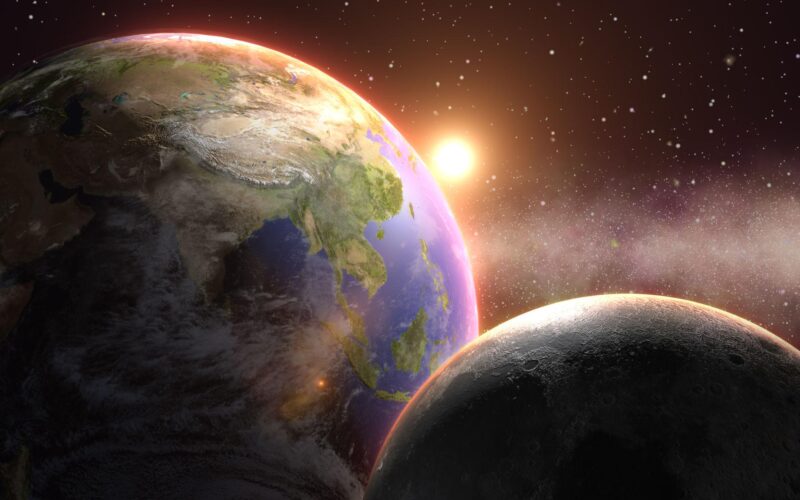
A natural satellite is a naturally occurring object that orbits a planet. The most well-known example is the Moon, which orbits the Earth.
An artificial satellite is a human-made machine launched into space to orbit the Earth or another celestial body. Artificial satellites are designed for specific purposes such as communication, observation, or scientific study.
Artificial satellites are launched into space using powerful rockets. Once they reach the correct altitude and speed, they begin orbiting the Earth due to the balance between gravity and their forward motion.
History of Satellites
The idea of satellites existed long before they were actually launched. In 1945, British scientist Arthur C. Clarke proposed the concept of communication satellites orbiting Earth.
The satellite era officially began on October 4, 1957, when the Soviet Union launched Sputnik 1, the world’s first artificial satellite. Sputnik was a small metal sphere equipped with radio transmitters that sent signals back to Earth.
The launch of Sputnik started the Space Age and sparked the famous Space Race between the Soviet Union and the United States.
In 1958, the United States launched its first satellite, Explorer 1, which discovered the Van Allen radiation belts around Earth.
Over the decades, satellite technology improved significantly. Today, countries around the world—including the United States, China, Russia, India, and many European nations—launch satellites for various purposes.
Private companies such as SpaceX have also entered the satellite industry, deploying large networks of satellites to provide global internet coverage.
Types of Satellites
Satellites are broadly classified into two main categories: natural satellites and artificial satellites.
Natural Satellites


Natural satellites are celestial bodies that orbit planets due to gravity. The Moon is Earth’s only natural satellite.
Other planets also have natural satellites. For example:
-
Jupiter has more than 90 moons
-
Saturn has over 80 moons
-
Mars has two moons, Phobos and Deimos
Natural satellites provide scientists with valuable information about planetary formation and the history of our solar system.
Artificial Satellites

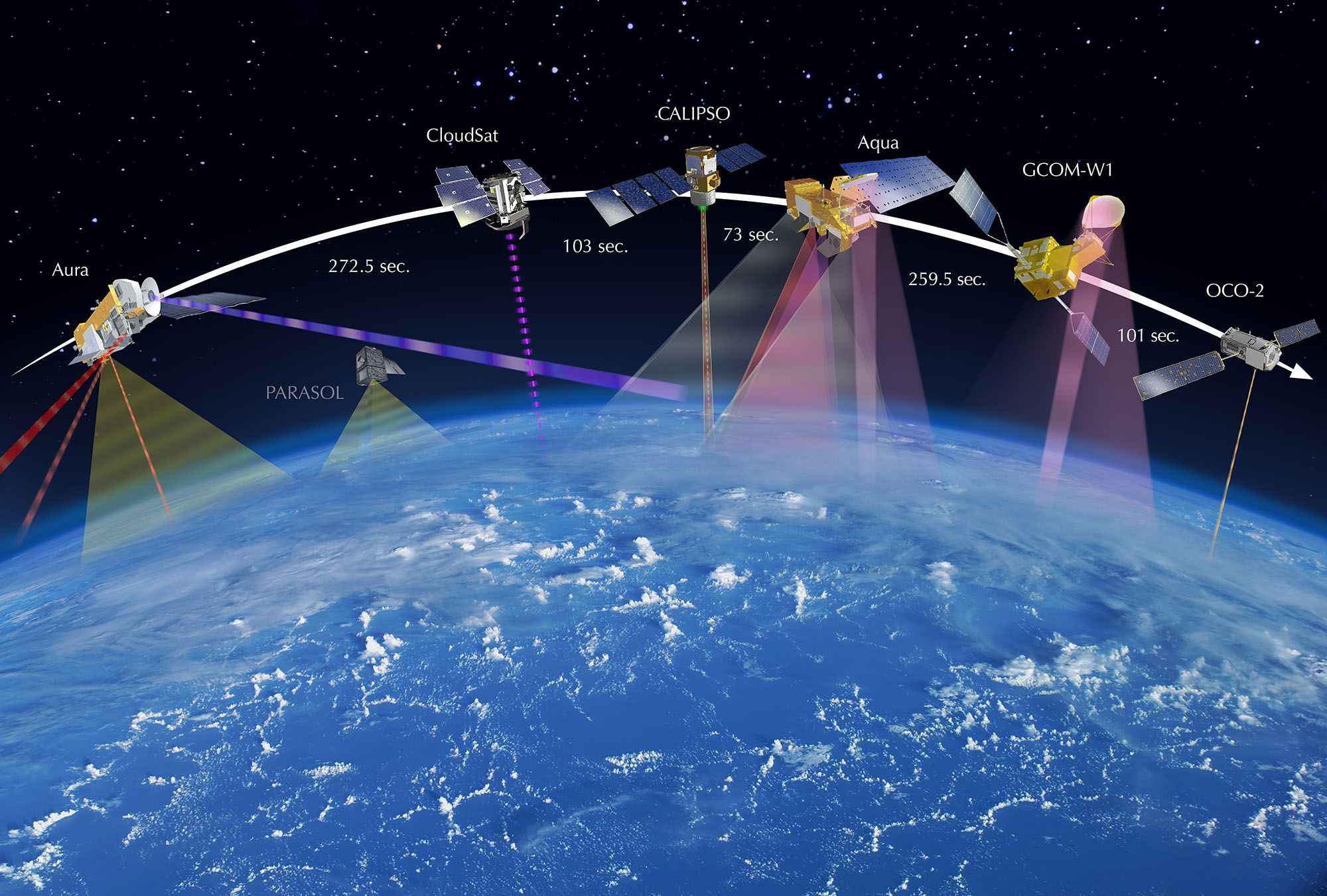

Artificial satellites are machines built by humans and sent into space using rockets. These satellites perform many important tasks, including communication, Earth observation, and navigation.
Some common types of artificial satellites include:
-
Communication Satellites – Used for television broadcasting, internet, and telephone communication.
-
Weather Satellites – Monitor weather patterns and help predict storms and climate changes.
-
Navigation Satellites – Provide positioning systems like GPS.
-
Earth Observation Satellites – Capture images of Earth for environmental monitoring.
-
Scientific Satellites – Study space, planets, and cosmic radiation.
How Satellites Work
Satellites operate by maintaining a constant orbit around Earth. To remain in orbit, a satellite must travel at a very high speed—usually around 28,000 kilometers per hour for low Earth orbit.
Two forces keep satellites in orbit:
-
Gravity – Pulls the satellite toward Earth
-
Forward Motion – Keeps the satellite moving forward
When these forces balance perfectly, the satellite stays in orbit without falling back to Earth.
Satellites communicate with ground stations using radio signals. These signals transmit data, images, and other information back to Earth.
Most satellites are powered by solar panels, which convert sunlight into electricity to operate their systems.
Parts of a Satellite
A satellite contains several key components that allow it to function properly.
1. Power System
Usually solar panels and batteries that generate and store electricity.
2. Communication System
Antennas that send and receive signals from Earth.
3. Control System
Computers and sensors that maintain the satellite’s orientation.
4. Propulsion System
Small engines used to adjust the satellite’s position.
5. Payload
The main equipment used for the satellite’s mission, such as cameras or scientific instruments.
Satellite Orbits
Satellites operate in different types of orbits depending on their mission.
Low Earth Orbit (LEO)
-
Altitude: 160 to 2,000 km
-
Used for Earth observation and space stations
-
Satellites move very fast and circle Earth in about 90 minutes
Examples include the International Space Station (ISS).
Medium Earth Orbit (MEO)
-
Altitude: 2,000 to 35,786 km
-
Commonly used for navigation satellites such as GPS systems
Geostationary Orbit (GEO)
-
Altitude: 35,786 km
-
Satellites appear stationary from Earth
-
Used mainly for communication and weather satellites
These satellites rotate at the same speed as Earth.
Uses of Satellites
Satellites play a vital role in many areas of modern life.
Communication
Satellites allow people across the world to communicate instantly. Television broadcasts, international phone calls, and internet connections often rely on satellite systems.
Weather Forecasting
Weather satellites monitor clouds, storms, and atmospheric conditions. They help meteorologists predict hurricanes, cyclones, and severe weather.
Navigation
Navigation satellites power systems like GPS, which help drivers, pilots, and ships determine their exact location.
Scientific Research
Scientific satellites study space, stars, galaxies, and cosmic radiation. They help scientists understand the universe.
Military Applications
Many satellites are used for defense purposes such as surveillance, reconnaissance, and missile detection.
Advantages of Satellites
Satellites provide many benefits to humanity.
-
Global communication coverage
-
Accurate weather prediction
-
Improved navigation and transportation
-
Disaster monitoring and management
-
Scientific discoveries about space
Satellites also help monitor environmental changes such as deforestation, climate change, and melting glaciers.
Challenges and Space Debris
Despite their benefits, satellites also create challenges.
One major issue is space debris, which includes broken satellites and fragments of rockets. These pieces of debris travel at extremely high speeds and can damage other satellites.
Another challenge is the high cost of satellite development and launch. Building and launching a satellite can cost hundreds of millions of dollars.
There is also growing concern about overcrowding in Earth’s orbit as thousands of new satellites are launched every year.
Future of Satellite Technology
The future of satellites is very promising. New technologies are making satellites smaller, cheaper, and more efficient.
Some important trends include:
-
Mini satellites (CubeSats) that are much smaller and less expensive
-
Satellite internet constellations providing global internet access
-
Advanced Earth monitoring satellites for climate change research
-
Deep space satellites for exploring other planets
Companies and space agencies are working on satellite networks that could connect every part of the world to high-speed internet.
Satellites will continue to play a key role in science, communication, and global development.
Conclusion
Satellites are one of humanity’s most important technological achievements. From communication and navigation to weather forecasting and scientific exploration, satellites have transformed the way we live and understand our world.
